Spoilers / V3 Beta
V3 Beta
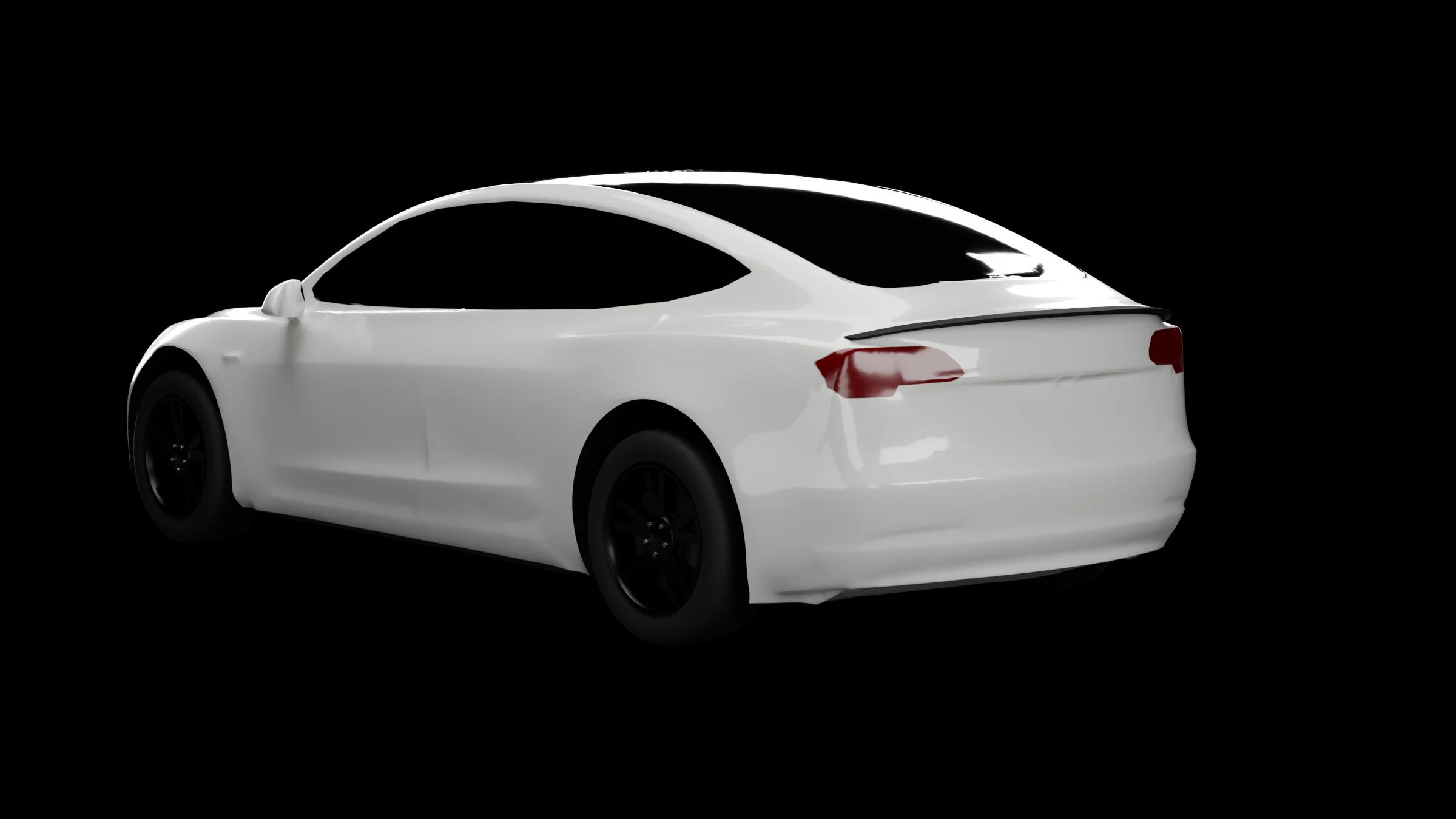
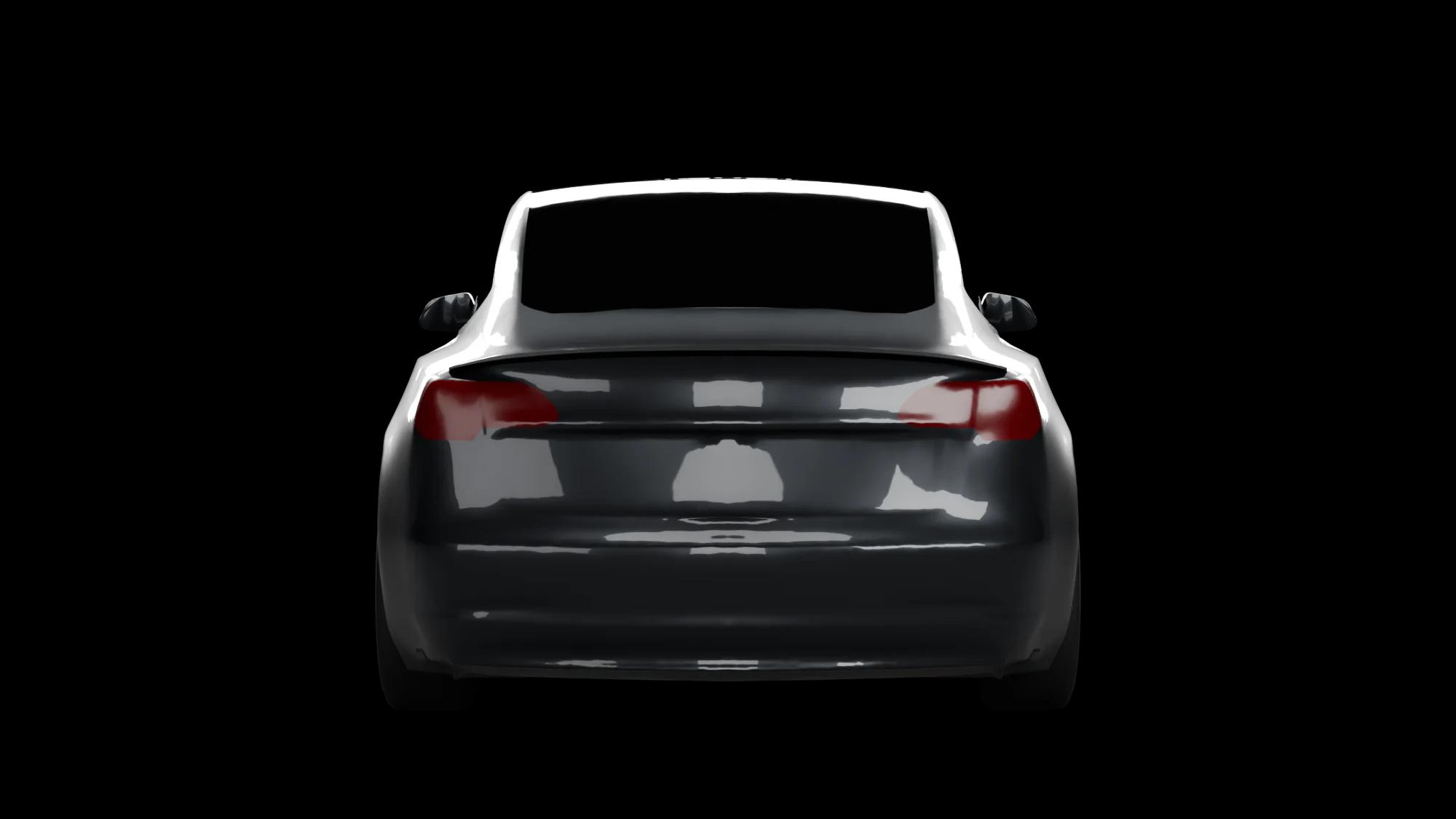
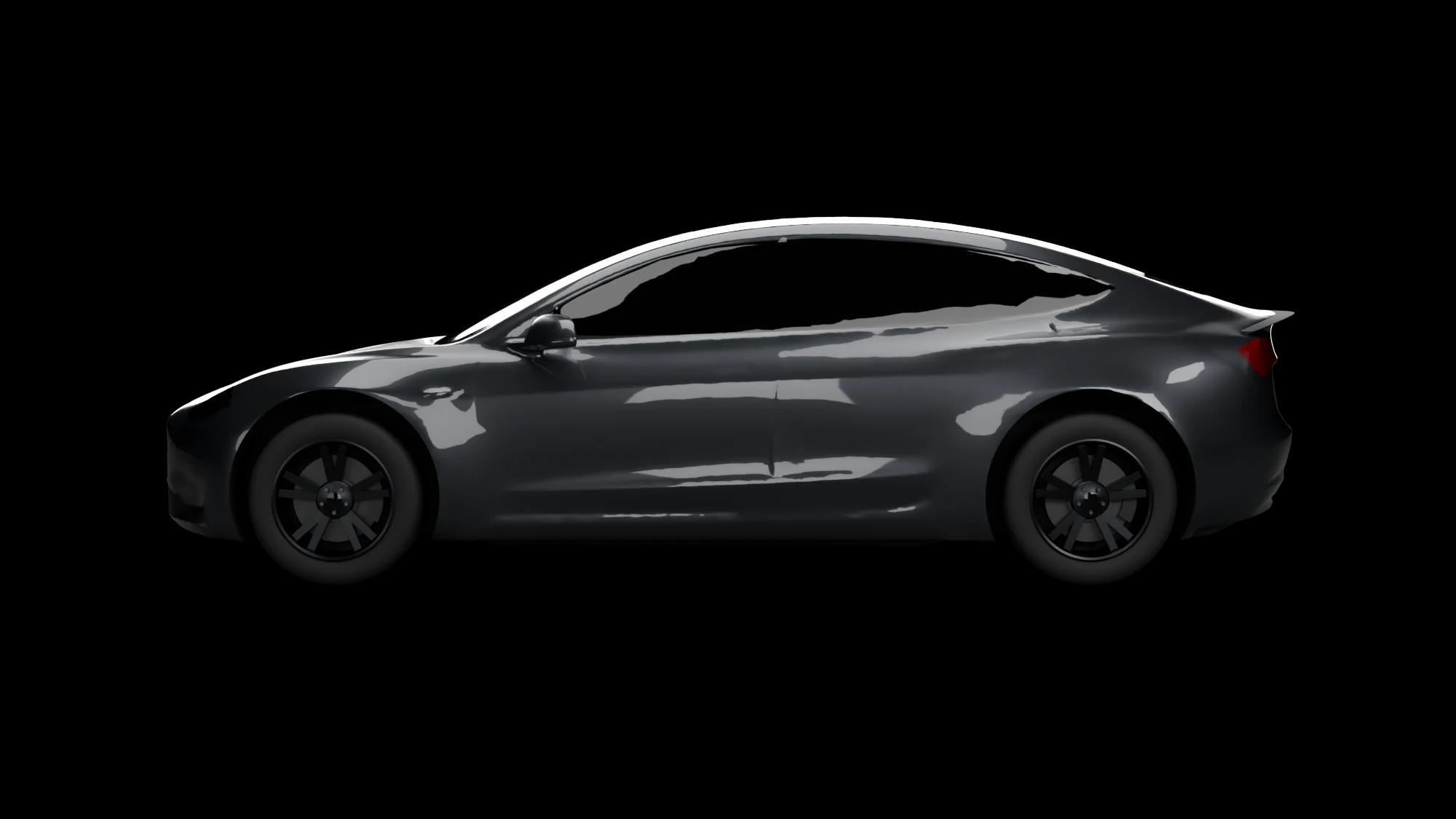
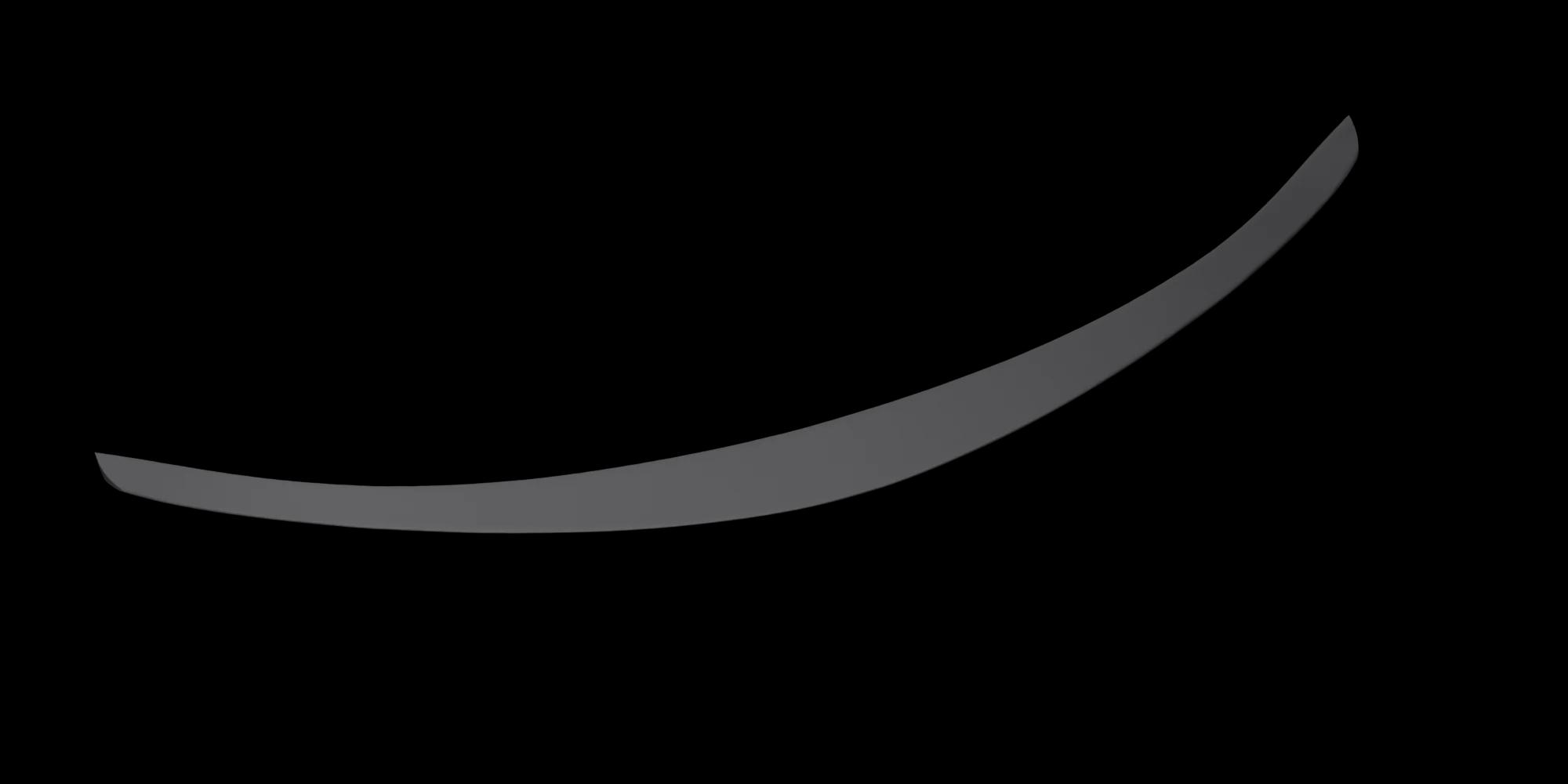
A full-width exoskeleton airfoil that wraps the trunk lid edge, with clean tips and no endplates. On our finest simulation it adds about 120 N of rear downforce at 80 mph and trims drag by about 3%.
What the CFD says
Changes against the same Model 3 with no spoiler at 80 mph, from our finest simulation: transient DDES on a 17.2 million cell mesh. ± is one standard error. Negative lift is downforce.
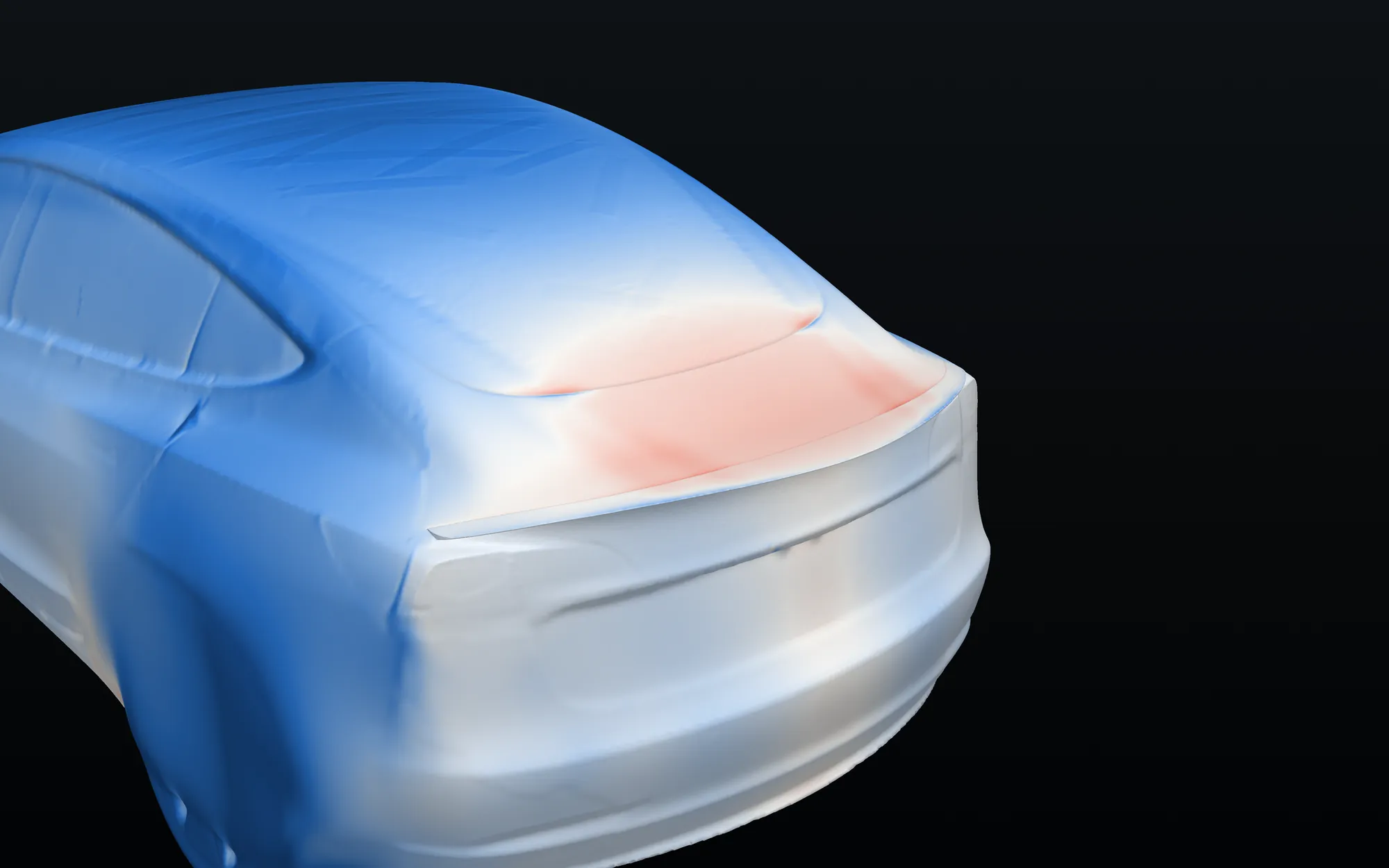
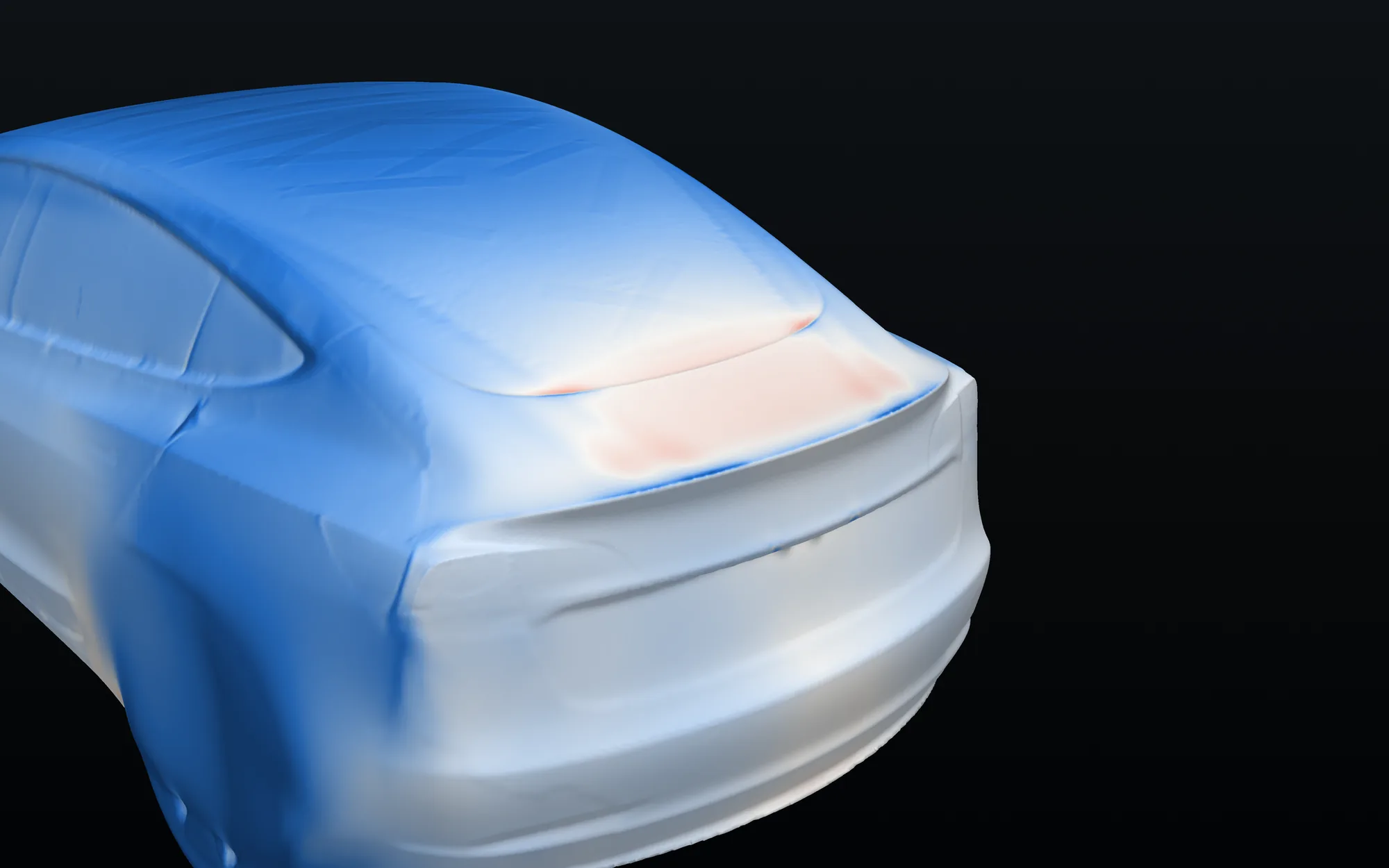
Mean surface pressure, finest mesh. Drag the handle: the red patch on the trunk lid is the pressure that pushes the rear down. Spin the car in the airflow viewer.
Our earlier 9 million cell run put the drag saving at 18 ± 4 N; the finest mesh says 10 N, about 3%. Rear downforce held: 125 N then, 119 N now, with a much tighter error bar.
Against the V3 Alpha on the same finest mesh the two are a statistical tie: the differences in drag and rear downforce (2 N and 10 N) are inside the error bars. Every number here comes from the same car model and settings, so they compare like for like.
Full method and data in the white paperStatus
| Simulation | Complete CFDTransient at two mesh levels, the finest at 17 million cells. |
|---|---|
| On the car | No result yet pending |
| Controlled test | Not yet run pending |
Construction
The airfoil is the structure
The spoiler is an exoskeleton airfoil: its single 0.7 mm wall of carbon fiber reinforced plastic is both the aerodynamic surface and the structure. That is how it stays this light.
| Weight | ≈225 g (0.50 lb) calculatedFrom the CAD skin at the 0.7 mm wall. Excludes the section joints and tape. Measured finished weight will be posted after weigh-in. |
|---|---|
| Measured weight | Not yet published pending |
| Skin | 0.7 mm single wall |
| Material | Carbon fiber reinforced plastic |
| Finish | Matte black |
| Span, tip to tip | 1,380 mm |
|---|---|
| Depth | 102 mm at the centerline, 59 mm outboard |
| Profile height | 26 mm max |
| Fitment | Tesla Model 3, 2017 to 2026Coming soon: Model Y Gen 1 and the refreshed Model Y. |
In the box
- 8 numbered sectionsThey snap together in order, 1 to 8.
- Pre-cut mounting tapeAlready cut to fit.
- Surface-prep wipeCleans the trunk lid before the tape goes on.
- Build videoThe video is the manual, step by step.
Professional installation recommended
The V3 Beta is bonded once. It is not designed to be removed, repositioned, or adjusted after installation: pulling or shifting it can crack or tear the 0.7 mm skin. Have a professional installer fit it, and dry-fit before any tape liner comes off.
Read the installation notesEffort tally
What went into it
The running count for the Model 3 spoiler program, totals only.
CFD receipt
Tesla Model 3 spoiler program
Updated October 28, 2026
- CFD solver runs
- 249
- over 10 minutes
- 156
- Iterations + time steps
- 438,164
- Meshes built
- 245
- Solver hours, CPU-equiv.
- ≈665
- CPU-equiv. core-hours
- ≈9,100
Totals only. All runs in OpenFOAM. Counts are lower bounds.
Simulated first. Made second.